
Planned patient journey
- 01 Online pre-consultation
- 02 Flight and welcome
- 03 Hospital appointment
- 04 Hotel and check-up
- 05 Return transfer
Treatment plan
Doctor's assessment and a category-specific procedure schedule.
Accommodation support
Discounted hotel and transfer times are planned together.
Get a second medical opinion
The opportunity to consult another specialist before deciding on treatment.
Multilingual communication
Receive service in your native language.
Implants are artificial tooth roots made of titanium that are placed into the jawbone to restore the function and aesthetics of missing teeth.
Today, implant treatment is modern dentistry's best alternative in cases of tooth loss. Implant treatment is the prosthetic rehabilitation method that delivers the best results by replacing natural teeth, especially in cases requiring a bridge where support from neighbouring teeth is not desired or no supporting teeth are available.
In cases of complete tooth loss, dental implants are the most successful option for improving the retention of a full denture and for fully fixed prosthetic applications. When performed with the correct diagnosis and with sufficient knowledge, experience and equipment, implant treatment can deliver highly successful results for both patient and dentist.
Who can receive implant treatment?
There is a suitable implant solution for people of every age. Implants can be applied to patients missing a single tooth, several teeth or all of their teeth — with the exception of children who are still growing.
Implant treatment can be applied to any patient once routine dental treatment has been completed. Patients with chronic conditions such as high blood pressure and diabetes can undergo successful implant procedures provided the necessary precautions are taken.
A solution for tooth and gum problems: Most patients who have lost teeth due to tooth decay or gum disease can regain their teeth through successful implant applications. Your teeth can easily be treated with implant applications.
Patients using removable or fixed dentures: Implants can be used in place of removable dentures or fixed bridges, and removable dentures can also be fixed onto implants. This offers patients more options and provides a more flexible, personalised treatment choice.
Types of implant treatment
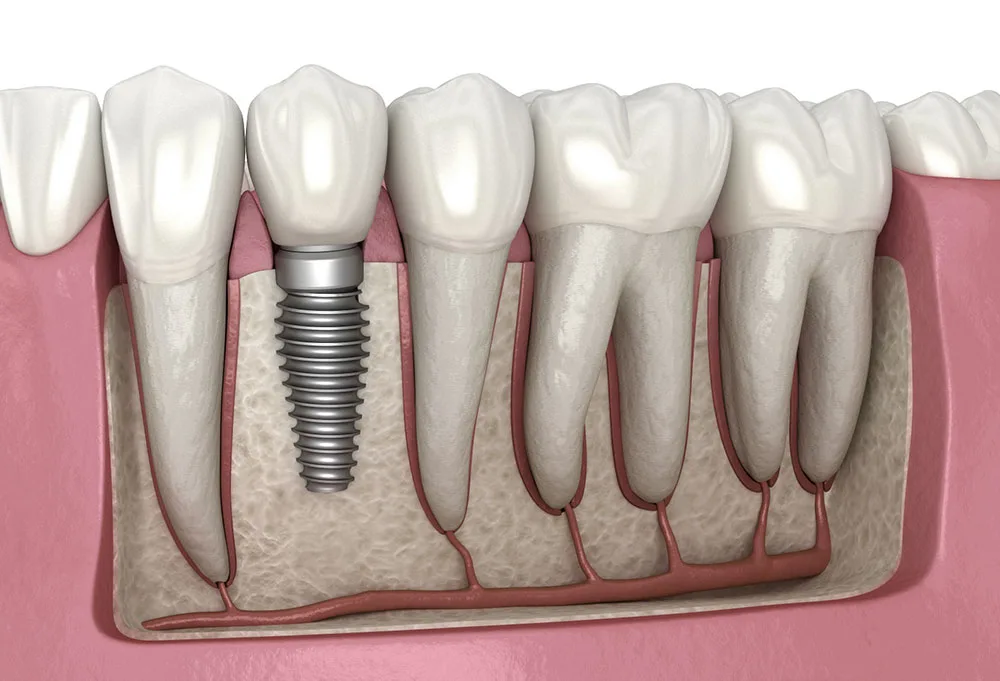 Endosseous Implants
Endosseous implants are titanium implants, with or without screws, placed directly into the bone tissue. They are used when the patient is missing one or more teeth.
Subperiosteal implants: These implants offer a highly specialised treatment method, being attached to the jawbone through a surgical procedure. This special treatment is very important for achieving healthy, attractive-looking teeth.
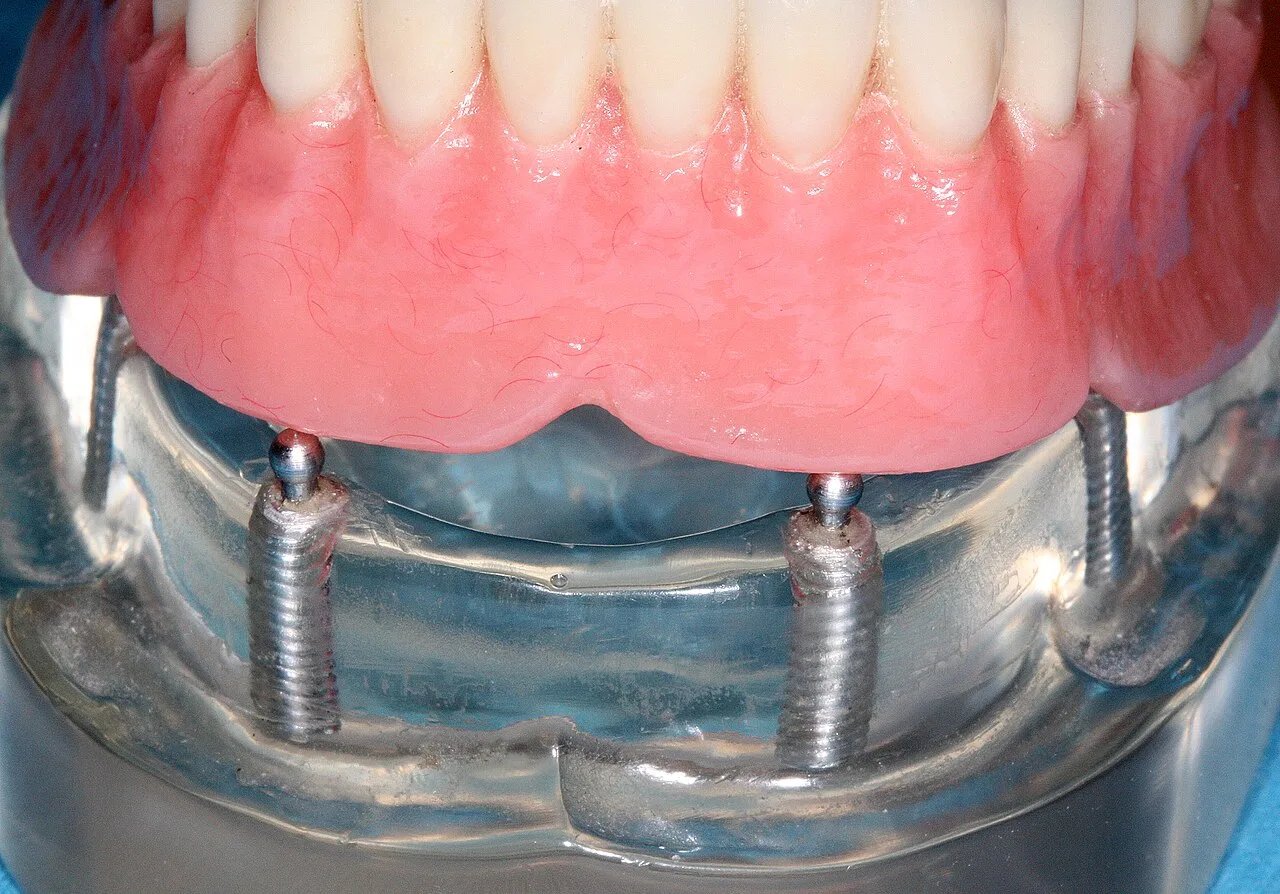 Intramucosal Implants
Patients who wear dentures can opt for this type of implant, used in single-tooth treatment, in order to use their dentures more comfortably or to prevent damage to them. Implants give patients the opportunity to protect and improve their oral health without having to have their dentures remade.
How long does implant treatment take?
The duration of implant treatment depends on the patient's condition, but it generally consists of two stages and takes about 6 months. The first stage takes roughly 10–15 minutes, while the placement of each implant takes 3–4 minutes. This procedure is an important part of the treatment process.
How is implant treatment performed?
The anaesthesia options for keeping pain under control during surgery include local anaesthesia, general anaesthesia and sedation. The dentist decides which of these options is appropriate after evaluating the patient.
However, depending on the patient's condition, general anaesthesia may be required for certain patient groups. The patient feels no pain during this treatment.
After surgery, patients may feel minimal pain as the anaesthesia begins to wear off. This pain can be managed with medication recommended by the doctor. Stitches are usually removed one week after surgery.
The implant is then left to fuse with the bone. A waiting period of approximately 2–6 months after surgery is required for the implant and the jawbone to integrate. If the dentist deems it necessary, a temporary denture may also be recommended while the treatment continues. The implant prostheses are fitted over several sessions, depending on the characteristics of the case.
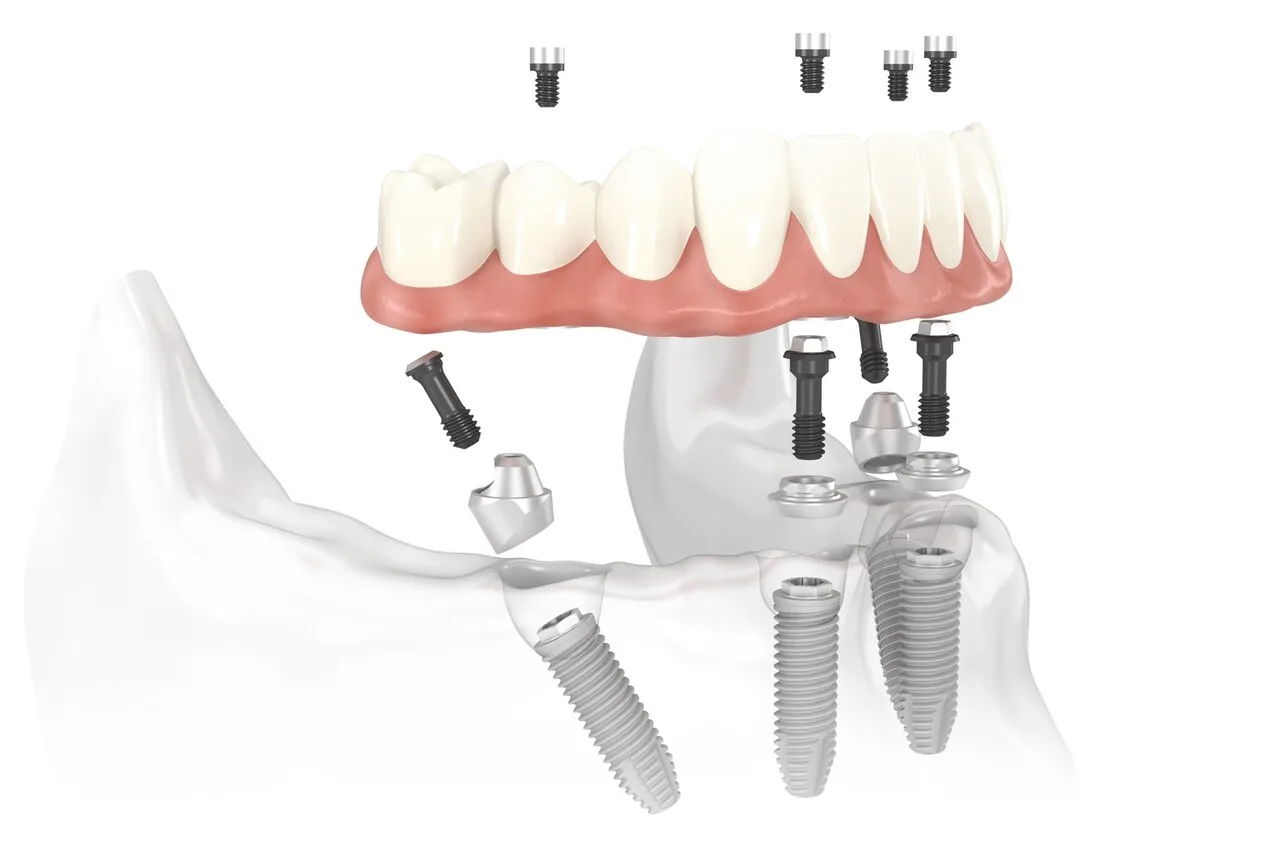 All-On-Four Treatment
All-on-four implant treatment is a method that allows dental prostheses to be fixed on the same day onto four dental implants placed at specific angles in edentulous patients. After this treatment, patients do not have to go through a waiting period without teeth or with removable dentures.
With the All-On-4 technique, patients achieve the smile aesthetics and function they desire through an easy, fast and satisfying treatment proven by long-term scientific studies.
Advantages of implant treatment
- Easier eating
- Better aesthetic appearance
- A healthy tooth root
- Clear, fluent speech
- Oral health
- Self-confidence

Contact Us
Leave a message.
When you fill out the form, your details are forwarded to the relevant email address.